Protein Fluidics
Private Company
Total funding raised: $3.5M
Overview
Founded in 2016, Protein Fluidics is a private, venture-backed company commercializing the Pu·MA System, an integrated instrument and consumable platform for automating assays on 3D cell models. The technology addresses critical bottlenecks in organoid and spheroid research by dramatically reducing hands-on time and improving assay reproducibility and sensitivity. Targeting the research tools market within proteomics and diagnostics, the company is in the early revenue stage, leveraging a platform business model to enable data-driven decisions in drug discovery and translational research.
Technology Platform
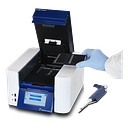
Pu·MA System: A bench-top microfluidic automation platform using disposable flowchips for precise, hands-off assay processing of 3D cell models (organoids, spheroids). Enables automated immunofluorescence staining, co-cultures, sequential drug additions, and supernatant sampling with minimal perturbation.
Funding History
1Opportunities
Risk Factors
Competitive Landscape
Protein Fluidics competes in the niche of 3D cell model automation. Direct competitors may include other startups developing microfluidic organoid platforms (e.g., AIM Biotech, Emulate). Indirect competition comes from manual protocols, generic liquid handlers requiring extensive customization, and high-content screening systems from large players like Revvity, Molecular Devices, and Agilent, which may add 3D-specific capabilities.