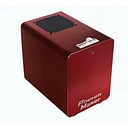
Nanotools Bioscience
Private Company
Funding information not available
Overview
Nanotools Bioscience is a private, pre-revenue platform company developing a novel optical stimulation technology for drug discovery. Its core innovation, Graphene-Mediated Optical Stimulation (GraMOS), uses graphene to convert light into precise electrical signals that depolarize cell membranes, enabling all-optical, high-throughput functional assays on genetically intact cells. This addresses a key bottleneck in early-stage drug screening by providing a scalable, non-genetic method to trigger and measure cellular activity. The company appears to be in a technology development and early collaboration phase, targeting research and pharmaceutical partners.
Technology Platform
Graphene-Mediated Optical Stimulation (GraMOS): A platform using graphene to convert light into precise electrical signals that depolarize cell membranes, enabling non-genetic, high-throughput, all-optical functional cellular assays.
Opportunities
Risk Factors
Competitive Landscape
Competitors include providers of automated patch clamp systems (Sophion, Molecular Devices) and optogenetic tools, which require genetic modification. GraMOS's key differentiator is offering physiological electrical stimulation at high throughput without genetic alteration, positioning it between these two established but limited approaches.