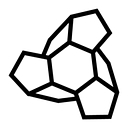
Ladder Bio
Private Company
Total funding raised: $3.8M
Overview
Ladder Bio is an early-stage biotech developing a unique synthetic modality, Spiroligomer™ molecules, designed to overcome limitations of both traditional small molecules and biologics. The company's platform enables the creation of highly structured, stable, and cell-permeable compounds with potential for high selectivity and oral bioavailability. Backed by a $5.5M seed round and led by industry veterans, Ladder Bio is building a computational design and screening pipeline to advance novel therapeutics and diagnostics.
Technology Platform
Spiroligomer™ platform: synthetic, modular, fused-ring macromolecules designed for precise 3D shape and functional group presentation, enabling selective protein binding with potential for oral bioavailability, cell permeability, and stability.
Funding History
1Opportunities
Risk Factors
Competitive Landscape
Ladder Bio competes in the crowded novel modalities space, facing competition from companies developing cyclic peptides, PROTACs, molecular glues, and other macrocyclic compounds. Its differentiation hinges on proving superior oral bioavailability and synthetic tractability compared to other peptide-inspired approaches and greater selectivity than traditional small molecules.