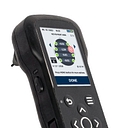
InfraScan
Private Company
Total funding raised: $6.5M
Overview
InfraScan develops and commercializes a portable brain hematoma detector, the Infrascanner, which enables rapid, non-invasive screening for bleeding in the skull following head trauma. The device is aimed at improving triage and decision-making in field settings where CT scans are unavailable, targeting military, emergency medical services, and sports medicine markets. As a private company with an approved and commercialized device, its challenge lies in achieving widespread clinical adoption and reimbursement. Its success hinges on demonstrating clinical utility and cost-effectiveness in diverse real-world environments.
Technology Platform
Handheld near-infrared spectroscopy (NIRS) device for non-invasive detection of intracranial hematomas by measuring differential light absorption in brain tissue.
Funding History
2Opportunities
Risk Factors
Competitive Landscape
InfraScan operates in a niche segment of portable neuro-diagnostics. Direct competitors are few, but it competes against the standard of care: physical neurological exam followed by CT imaging. It may face future competition from other companies developing portable EEG, ultrasound, or other optical technologies for brain monitoring. Its primary challenge is displacing the reliance on subjective clinical assessment in pre-hospital settings.